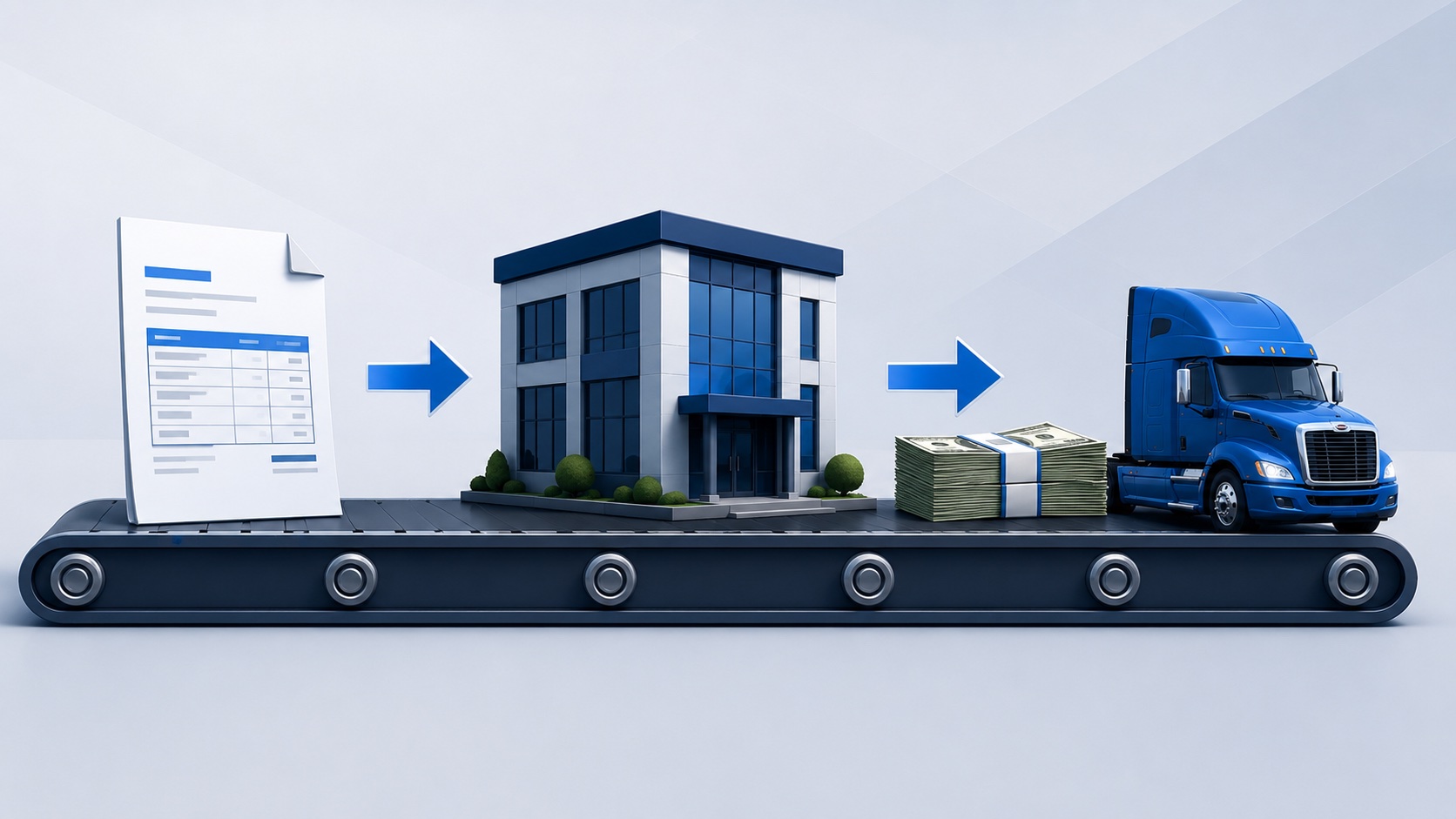
Factoring makes trucking taxes feel more complicated than they are. Money arrives from a factor instead of a broker, a fee disappears before you ever see it, and come filing season a very reasonable question appears: what does any of this mean on my return? The short version is comforting: factoring changes when you get paid, not how you are taxed. Here is the plain-English walkthrough.
Yes: factoring fees are an ordinary business expense, deductible like insurance, fuel, or dispatch fees. If you grossed $250,000 and paid $7,500 in factoring fees, those fees belong with your other business expenses on your return (for sole proprietors, that is the Schedule C expense section).
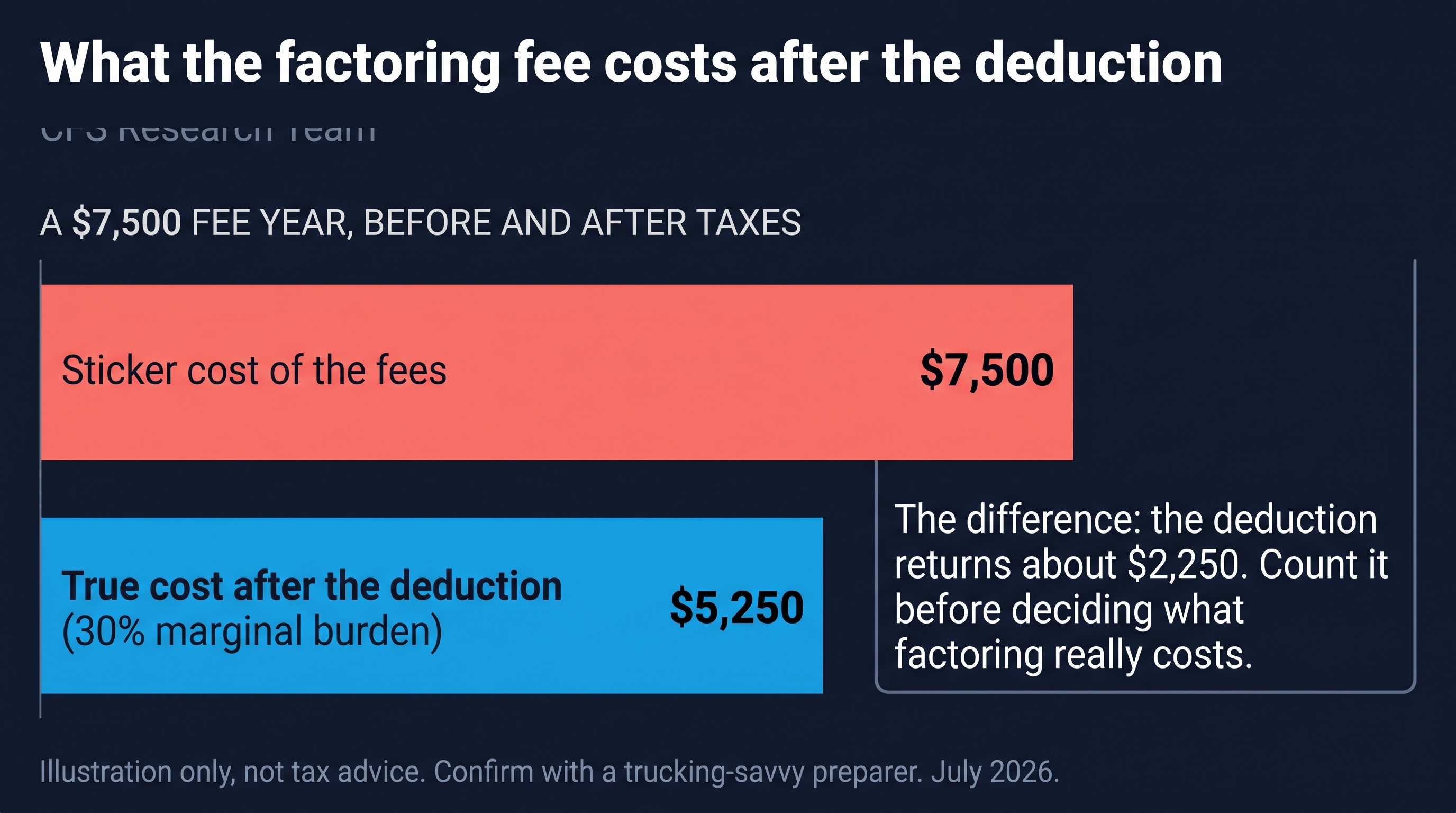
The dollar effect is worth saying out loud: at a combined federal and self-employment marginal burden in the neighborhood of 30 percent, a $7,500 fee year generates roughly $2,250 of tax reduction, which quietly lowers factoring's true cost. The fee still costs money; it just costs less than the invoice says once April is counted. Our worth-it math should be read with this line in it.
CFS researches factoring companies, not tax law. This article is general information, not tax advice; confirm your specific situation with a tax professional who works with trucking businesses.
You report the full invoice amount as gross revenue, then deduct the fee as an expense. Haul a $3,000 load, receive $2,910 after a 3 percent fee, and the books show $3,000 of revenue and $90 of expense, not $2,910 of revenue. Same profit, correct presentation, and it keeps your gross consistent with what brokers and shippers report paying for your services.
This matters practically: lenders, insurers, and the IRS all read gross revenue, and under-reporting it by netting out fees makes your business look smaller than it is while muddying the expense trail. Factoring statements make the clean version easy; every settlement shows invoice amount, fee, and net, which is your bookkeeping already done.
Sammy Lloyd learned the expensive version of this: three boom years on paid-off equipment left him almost nothing to deduct, and the result was a $120,000 IRS bill that nearly took the company. Gross revenue is what the IRS reads; write-offs are what you plan for.
Download your factoring year-end summary in January before filing season, and store monthly statements as they arrive. Five minutes a month replaces a very bad afternoon in April.
Here is where carriers overthink it. Your revenue is what you invoiced, whatever 1099s arrive. Depending on the parties, forms can come from brokers, from the factor, or imperfectly from both; payment processors and factors have their own reporting obligations, and broker back offices vary in diligence.
The defensive posture is simple: keep your own revenue records and reconcile 1099s against them, not the other way around. Your factoring statements are a complete, dated ledger of every invoice, fee, and payment; download the year-end summary and hand it to your preparer alongside any 1099s. Mismatches are common and fixable; missing records are neither.
Netting fees out of revenue understates your gross, which can hurt loan applications and insurance quotes that read top-line revenue. Report the full invoice; deduct the fee.
A few factoring-specific wrinkles deserve a flag for your preparer. Reserve releases: if your factor holds a reserve, the held portion is still your revenue from the original invoice; the release is not new income. Chargebacks: a recourse chargeback effectively reverses revenue you recorded, and your statements document it. Year-end straddles: a December 30 invoice funded January 2 lands differently for cash-basis filers, and your factor's dated statements decide it cleanly.
None of these are problems; all of them are five-minute conversations with a preparer if the statements are in the folder. The theme of this entire article is that the factor accidentally runs your bookkeeping; let it.
Hand your tax pro the year-end factoring summary AND a one-line note on how you booked the fees, full-invoice-plus-expense or netted. The mismatch between those two stories is where amended returns come from.
Factoring is tax-neutral in structure and mildly tax-favorable in practice: full invoice as revenue, fee as a deductible expense, statements as ready-made records. Keep the year-end summary, reconcile the 1099s against your own ledger, and let a trucking-savvy preparer handle the wrinkles. For what the fee itself should be, start at the rates guide and the calculator.
Yes: they are an ordinary business expense, deductible alongside insurance and fuel. A $7,500 fee year reduces taxes by roughly $2,250 at a 30 percent marginal burden.
The full invoice as gross revenue, with the fee deducted as an expense: $3,000 of revenue and a $90 fee, not $2,910 of revenue.
Reporting varies by party and situation; treat any 1099s as documents to reconcile against your own records, with your factoring year-end statement as the source of truth.
No: it changes payment timing, not tax treatment. You pay tax on the same profit you would have earned waiting on the broker.
Your factoring year-end summary, monthly statements, and rate confirmations. The factor's ledger of invoices, fees, and payments is most of your revenue bookkeeping already done.
Keep the NOA letter and your factoring agreement with your tax records: if reported income is ever questioned, the paper trail explaining why broker payments went to a third party is the whole answer.
The factoring fee is the rare trucking expense that documents itself.
New articles for owner-operators, delivered twice a month.